Why we open the season with a two-hander
A season's first night sets its tone. For a small company, two actors and a bare stage say more than a full cast ever could.
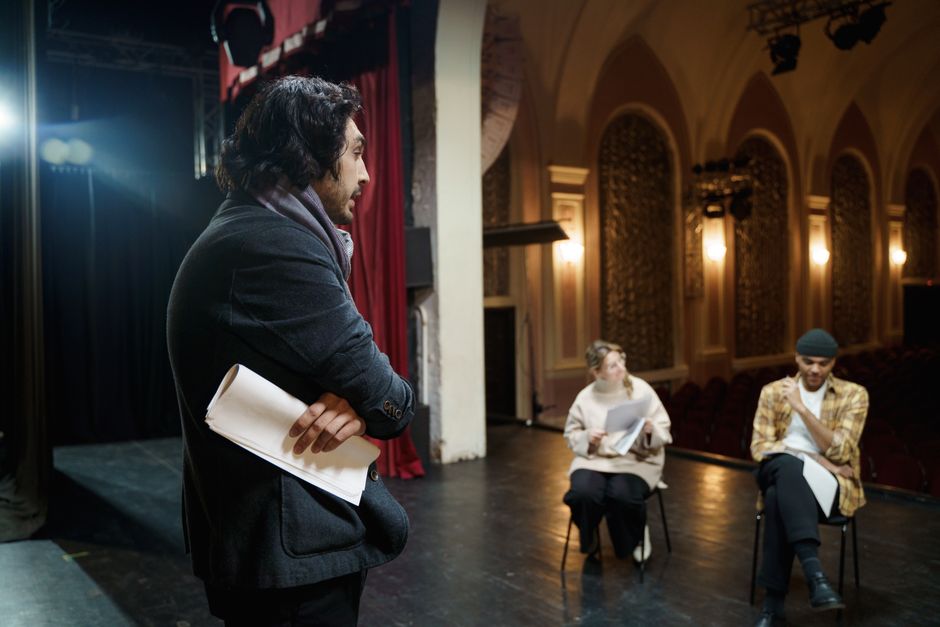
Every autumn we have the same argument in the same room: open big or open small. We keep landing on small, and not because of money alone. A two-hander is the clearest statement a company can make about what it values, and it tells a new audience within ten minutes whether this is a theatre they want to come back to.
Constraint is the director's friend
With two people and one room, nothing hides behind spectacle. The writing has to carry, the acting has to land, and the audience leans in because there is nowhere else to look. Every weakness is visible — which sounds like a risk and is actually a discipline. A cast of twelve can paper over a slack scene; two people cannot.
Programming for a real room
We choose plays that fit our stage and our town, not a West End we don't have. Ambition is picking the right play, not the biggest one. A show that needs a revolve and a flying rig will be a worse evening in our space than a well-judged chamber piece, no matter how good the script is on the page.
What we actually ask of a script
- Can it live on one set without the audience feeling cheated?
- Does it give both actors something to play, not one lead and one listener?
- Will it mean something to the people who live ten minutes away?
- Can we rehearse it properly in the weeks we genuinely have?
Building the rest of the season around it
Once the opener is set, the rest of the year balances it: something larger mid-season when the company is warm, something lighter in the dead weeks after New Year, and a new piece in late spring when audiences are most willing to take a risk with us. The craft behind the run is in stagecraft.